
When chimney work in Marin County needs a permit
A chimney repair that needs a permit in San Rafael may route through a completely different office than the same repair in Fairfax or unincorporated Marin. Here is what typically triggers a permit, and who to ask.
Published
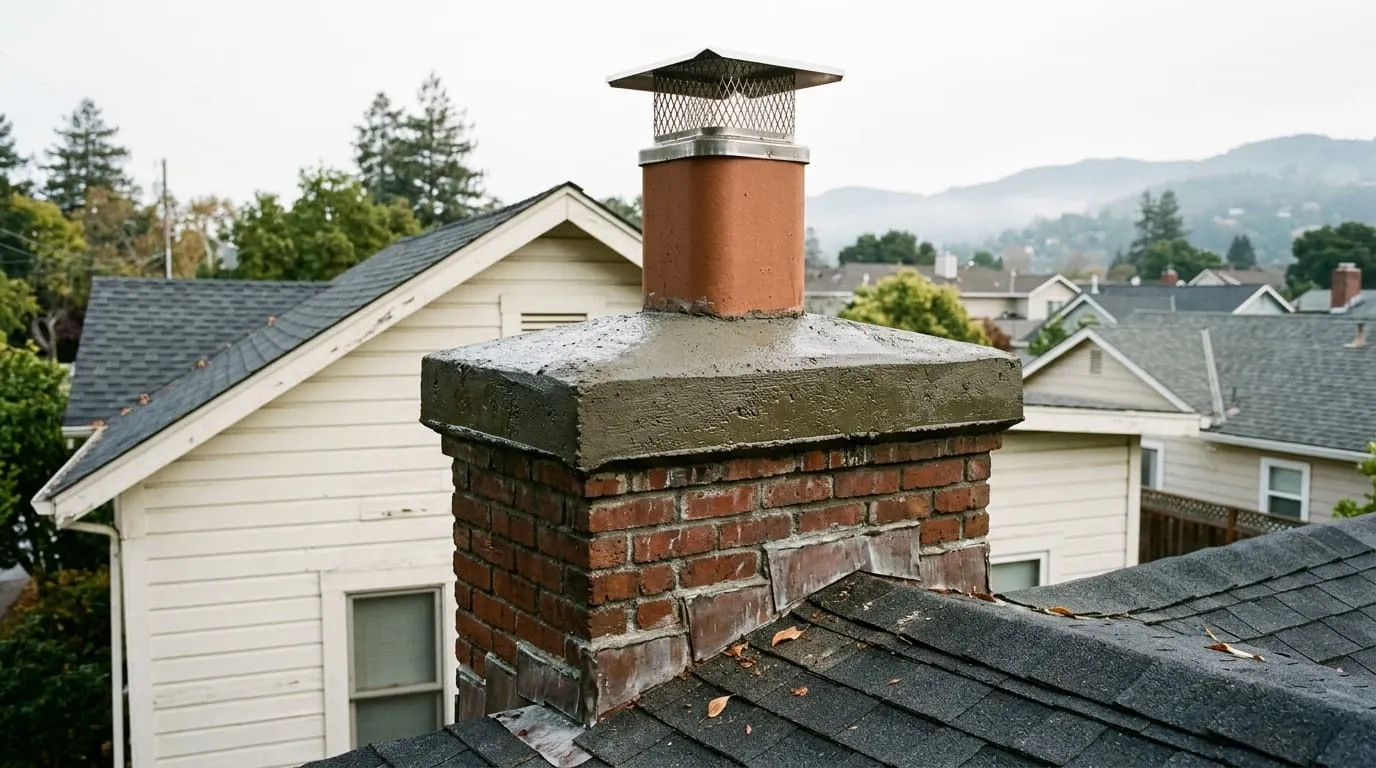
Marin County is not one continuous city with a single building department — it is eleven separate incorporated cities plus the unincorporated county itself, each with its own permitting authority for work inside its own limits. That matters for chimney repair specifically because a straightforward crown or mortar job might sail through without a formal permit in one town, while a comparable job a few miles away, inside a different city’s limits, follows a genuinely separate process. Knowing which applies to a given address, before work starts, avoids a delay nobody wants partway through a repair.
What typically triggers a permit
Across most California jurisdictions, including Marin’s cities and the county’s own unincorporated areas, routine chimney maintenance — a sweep, a cleaning, a straightforward inspection — does not require a building permit, because it is not construction work in the code’s sense. What tends to trigger a permit is structural work: a full crown rebuild, significant repointing that goes beyond a small patch, a liner replacement, or any repair that touches how the chimney is tied to the house’s framing. The exact threshold varies somewhat by jurisdiction, which is precisely why “does this need a permit” is worth asking specifically rather than assuming the answer from a repair done elsewhere.
San Rafael, the county seat, and the largest permitting office
As Marin’s county seat and largest city, San Rafael’s building and safety division handles the highest volume of chimney-related permits in the service area, simply by virtue of the city’s size and the range of housing stock inside it — from downtown’s early-1900s masonry to Terra Linda’s postwar tract homes. San Rafael’s own process is also the one that governs unincorporated pockets of the county that fall under county rather than city jurisdiction, which can surprise a homeowner who assumes “San Rafael area” and “City of San Rafael” mean the same permitting authority.
Marin’s smaller cities each keep their own office
Novato, Mill Valley, San Anselmo, Larkspur, Corte Madera, Tiburon, Fairfax, Sausalito, Belvedere and Ross each maintain their own building department, sized to the town itself — which in several cases means a smaller, more personally staffed office than San Rafael’s, with its own review timeline and its own specific submission requirements. A structural repair permit in Fairfax, for instance, is submitted to and reviewed by Fairfax’s own department, not routed through the county or through San Rafael, even though Fairfax sits well inside Marin County geographically. The same is true for each of the other small cities — proximity to a larger neighbor does not mean shared permitting.
Historic-district and design-review considerations
Several of Marin’s older downtown cores — San Anselmo’s creek-side historic district, Tiburon’s Main Street railroad-era buildings, parts of Sausalito’s Old Town — carry additional design-review requirements on top of standard building permits for exterior work visible from the street, which can include chimney repair depending on how visible the work is and how the specific jurisdiction’s ordinance is written. This is not universal across every historic-feeling street in Marin, and it is worth confirming for a specific address rather than assuming either way based on how old a neighborhood looks.
Wildland-Urban Interface zones add their own layer
For a property inside one of Marin’s WUI zones — concentrated around Fairfax and Mill Valley’s Mount Tamalpais-adjacent canyon streets, and parts of Novato’s grassland edges — a chimney cap or spark-arrestor installation may fall under fire-code review specific to that designation, separate from or in addition to standard building permitting. This is one more reason a WUI-zone property benefits from confirming requirements before work starts rather than after.
What we actually do about permitting
We are not a permitting office, and the final responsibility for filing typically sits with the property owner or a licensed general contractor, per each jurisdiction’s own rules — that is true countywide, not specific to any one Marin city. What we do is tell you plainly, based on the actual scope of a diagnosed repair, whether it is the kind of work that has historically required a permit in that jurisdiction, and point you toward the correct department for that specific address rather than a generic county answer that might not apply. For structural work — a crown rebuild, a liner replacement, anything touching the chimney’s tie to the house framing — we build permitting into the project timeline from the start rather than treating it as an afterthought once work is already scheduled.
What a missed permit actually costs later
Skipping a required permit does not make the underlying work go away — it just means the work exists without an inspection record, which becomes a real problem at the least convenient moment: a home sale, a refinance, or an insurance claim, all of which can ask whether structural chimney work was permitted and inspected. A buyer’s inspector or a title company can flag unpermitted structural work as a condition of closing, turning what would have been a routine part of the original repair timeline into a delay negotiated under pressure months or years later. We would rather build the permit timeline into the original schedule than have a homeowner discover the gap at exactly the moment it is hardest to fix.
Timeline expectations vary by office
Because each Marin city runs its own review process, the time a permit takes to clear also varies — a smaller office like Fairfax’s or Ross’s may turn around a straightforward repair permit faster simply because of lower volume, while San Rafael’s larger office, handling the county’s highest volume of applications, can run longer during a busy season. Neither is a reflection of how complicated the actual chimney work is. We tell you what we have seen typically, for the specific jurisdiction involved, rather than quoting one countywide timeline that does not actually hold everywhere.
Booking a repair with permitting in mind
If you are weighing a chimney repair and want to understand whether it is likely to need a permit before you commit to scheduling, tell us the address and describe what you have noticed — we will scope the actual condition first, since the permit question depends on what the repair turns out to be, not on a guess made before anyone has looked at the chimney. We work across all of Marin’s cities and the unincorporated county, within our twenty-mile radius from central Sausalito.
Read next
More from the blog
Wildfire and WUI spark-arrestor rules in Marin County
Fairfax, Mill Valley’s canyon streets and parts of Novato sit inside a genuine Wildland-Urban Interface zone under California fire code. Here is what a WUI designation actually changes about a chimney cap, and how to tell if your property is inside one.
How Mount Tamalpais' terrain affects chimney draft
Two nearly identical fireplaces a few streets apart in Mill Valley or Fairfax can draw completely differently, and the reason usually has more to do with the mountain looming over both of them than with either chimney itself.
Chimney work on Sausalito’s hillside homes
A Sausalito hillside address is not a driveway job. Narrow switchback stairs, steep roof pitches and terraced lots change how equipment reaches the roof and how long a visit actually takes — here is what that means before you book.
Get a scope, permitting included
We diagnose first, then tell you plainly whether the scope typically needs a permit in your city.